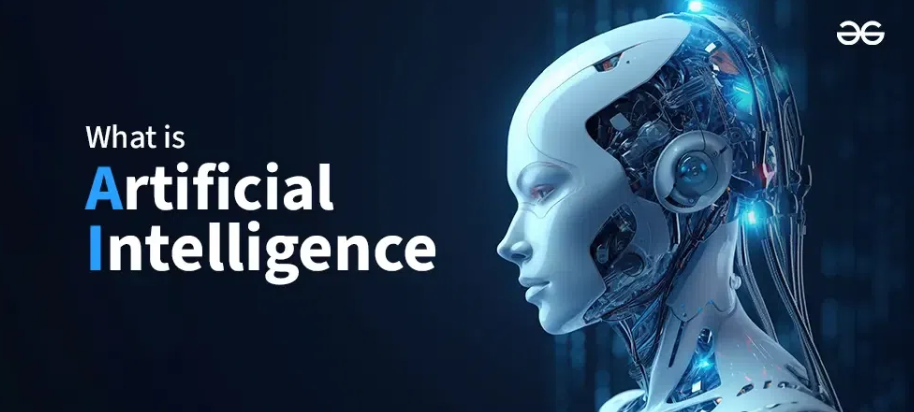

Artificial Intelligence, or AI, is a technology that allows machines to mimic human-like thinking and decision-making. Instead of just following fixed instructions, AI systems can learn from experience, identify patterns, and make predictions.
Think of AI as teaching a robot to solve problems: initially, it doesn’t know much, but with enough data and practice, it becomes smarter just like a person learning a new skill.
Why AI is Important Today
AI is no longer a futuristic concept; it’s part of our everyday lives. From the apps on your phone to the way banks detect fraud, AI is silently improving efficiency and convenience. Businesses use it to save time and money, while individuals benefit from personalized recommendations, smarter search results, and faster customer service.
AI is shaping the future of industries like healthcare, finance, transportation, and entertainment, making it essential to understand its basics.
How Artificial Intelligence Works
The Core Idea Behind AI
At its heart, AI is all about learning from data. Machines are fed large amounts of information, and algorithms help them recognize patterns. For instance, an AI that identifies emails as spam doesn’t memorize every email it learns from the characteristics of spam messages and applies that knowledge to new emails.
The key point is that AI improves with experience. The more it “practices,” the better it gets at completing tasks.
Role of Data and Algorithms
Data is like the fuel for AI, while algorithms are the engine. Without data, AI cannot learn or make decisions. Without algorithms, data is useless because there’s no method to process it.
Machine learning, a subset of AI, uses algorithms to find patterns in data and make predictions. Deep learning, a more advanced form, uses neural networks that imitate the human brain to process complex tasks like recognizing faces, translating languages, or even generating images.
Types of Artificial Intelligence
Narrow AI (Weak AI)
Narrow AI is designed for a specific task. Examples include voice assistants like Siri or Alexa, recommendation systems on Netflix, and chatbots on websites. These systems are good at one thing but cannot perform tasks outside their domain.
For example, a Netflix recommendation AI cannot drive a car; it only knows how to suggest shows based on your viewing history.
General AI (Strong AI)
While still theoretical, this type of AI would be able to think, learn, and adapt across various domains.
Imagine a robot that can cook, play chess, write a story, and solve math problems just like a human. General AI is a major research goal, but it hasn’t been achieved yet.
Super AI (Future Concept)
Super AI is the idea of machines becoming smarter than humans in every aspect, including creativity, decision-making, and emotional understanding. While it’s purely hypothetical, it sparks important discussions about ethics, control, and the impact on society.
Common Uses of AI in Daily Life
AI in Smartphones
AI is everywhere in smartphones today. From unlocking your phone with facial recognition to predicting your next word while typing, AI enhances convenience and security. Smartphone cameras also use AI to improve photo quality by adjusting brightness, detecting faces, and even removing blur automatically.
AI in Social Media
Social media platforms like Facebook, Instagram, and TikTok rely heavily on AI. Algorithms analyze your behavior, likes, and interactions to show content tailored just for you. AI also helps detect fake accounts, filter spam, and suggest friends or pages based on your preferences.
AI in Healthcare and Business
In healthcare, AI is revolutionizing diagnosis and treatment. AI can analyze medical images to detect diseases like cancer at early stages or predict potential health risks based on patient data.
In business, AI improves customer service through chatbots, predicts market trends using data analysis, and optimizes supply chains. Companies using AI often save costs and make faster, more informed decisions.
Benefits of Artificial Intelligence
Automation and Efficiency
AI can handle repetitive tasks, freeing humans to focus on creative or strategic work. For instance, factories use AI-powered robots for assembly lines, while offices use AI tools for data entry or email sorting.
This automation increases efficiency, reduces human error, and speeds up processes across industries.
Better Decision-Making
AI can process massive amounts of data much faster than humans, leading to better decisions. Businesses use AI to analyze customer behavior, predict sales trends, and optimize marketing campaigns.
In healthcare, AI assists doctors in choosing the most effective treatment based on patient data, improving outcomes and saving lives.
Disadvantages of AI
Risk of Job Loss
As AI automates more tasks, some jobs may disappear, especially those involving repetitive work. For example, roles in factories, customer service, or data entry are increasingly automated.
However, AI also creates new jobs in tech, data science, AI maintenance, and cybersecurity, so adapting and learning new skills is essential.
Privacy and Security Concerns
AI depends on data, which raises concerns about privacy and misuse. Personal information can be collected without consent, and AI systems can be hacked or exploited.
It’s crucial to have regulations and secure systems to protect users while still benefiting from AI technology.
AI vs Human Intelligence
Key Differences
Human intelligence is emotional, creative, and intuitive, while AI relies purely on data and logic. Humans can think abstractly, imagine, and understand emotions, whereas AI can only follow its programming and learned patterns.
Machines are faster at calculations and data analysis, but cannot replicate human creativity or empathy.
Can AI Replace Humans?
AI cannot fully replace humans, at least not in the foreseeable future. It can assist, automate, and improve productivity, but human oversight and creativity remain irreplaceable. AI is most effective when working alongside humans, not in place of them.
Future of Artificial Intelligence
AI Trends in 2030
Self-driving cars, smart homes, personalized healthcare, and AI-powered education platforms will become more common.
Businesses will rely heavily on AI for strategic decision-making, and AI will play a key role in global innovations.
Impact on Jobs and Society
AI will change the job landscape. Some roles may disappear, but new opportunities in AI research, robotics, and data analysis will emerge. Society will need to adapt by investing in education and upskilling to ensure a smooth transition into an AI-driven world.
How to Start Learning AI
Skills You Need
To start with AI, basic knowledge of mathematics (especially statistics), programming (Python is popular), and problem-solving is essential. Understanding machine learning concepts and data analysis will help you get started.
Free Resources and Tools
Several free resources exist for beginners. Platforms like Coursera, edX, and YouTube tutorials provide step-by-step lessons. Open-source tools like TensorFlow, PyTorch, and Google Colab allow learners to practice AI projects without expensive software.
Hands-on practice is the key: try building small AI models for tasks like image recognition, text classification, or simple chatbots.
Conclusion
Artificial Intelligence is transforming the world, from simple smartphone apps to advanced industrial systems. While it has challenges like privacy concerns and potential job disruptions, its benefits in efficiency, decision-making, and innovation are undeniable.
For beginners, understanding AI and starting to learn its basics is a smart move. By embracing AI responsibly, humans can work alongside machines to build a smarter, more productive future.